
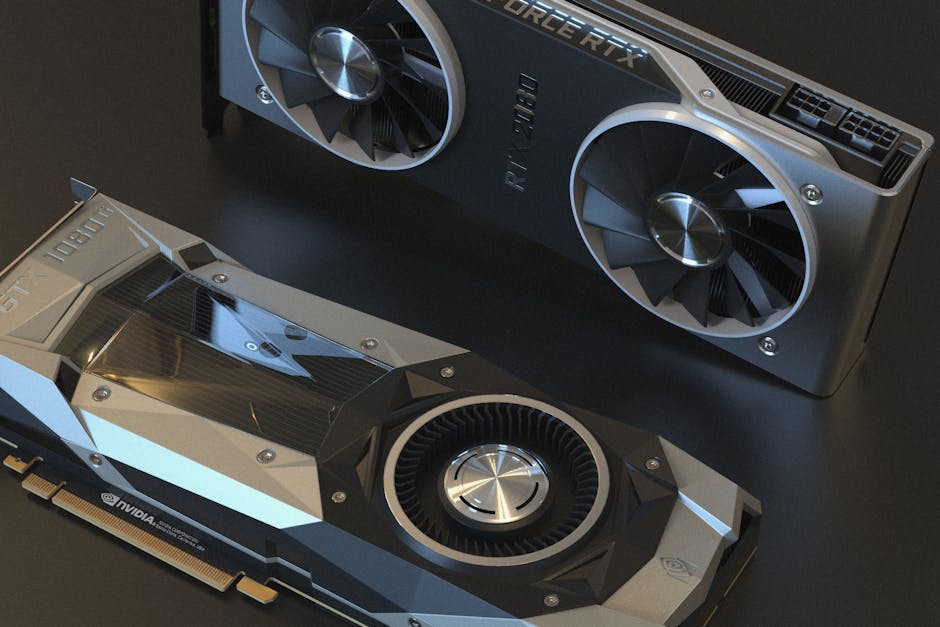
NVIDIA vs AMD for Gamers and Creators: Real-World Benchmarks and Buying Recommendations
Here’s the annoying truth: the “best” GPU for gaming and creating depends more on your apps and monitor than on the brand name. In my own build checks in 2026, I’ve seen two systems with the same CPU and RAM, but very different results just because one person uses different video tools or runs different games at different settings.
If you’re searching for NVIDIA vs AMD for Gamers and Creators, you want a straight answer: which one gives you better frames, better creator speed, and fewer headaches per dollar. The good news is you can pick correctly with a few practical rules—VRAM size, feature support (like ray tracing and upscaling), and the exact software you use.
NVIDIA vs AMD for Gamers and Creators: The quick decision that saves money
Your fastest path to the right GPU is to match the card to your “main workload,” not to the loudest benchmark chart. For gaming, NVIDIA usually wins in top-end ray tracing and smoother upscaling in many popular titles. For creators, AMD often brings strong raw rendering value, but NVIDIA is usually the safest pick if you use CUDA-based workflows.
NVIDIA vs AMD isn’t just brand drama. It’s about software support. NVIDIA’s CUDA ecosystem is a big deal for tools like Adobe apps (through GPU effects), DaVinci Resolve workflows, many AI helpers, and a lot of video render pipelines. AMD does great work too, but some effects and plugins land better on NVIDIA.
Real talk: what people get wrong when choosing between NVIDIA and AMD
Most people compare one game at one setting. That’s how you end up buying a great card that stumbles in your real library.
- They ignore VRAM: 8GB in 2026 can feel tight at 1440p with high textures, especially with ray tracing or heavy mods.
- They assume “more FPS” means faster creation: video work often depends on your codec, timeline effects, and whether your app loves the GPU brand.
- They forget the power and noise part: a cheaper card that runs hotter can be a worse daily experience.
What matters in 2026 benchmarks (and how I measure “real-world”)
Real-world benchmarks are about consistency, not one lucky screenshot. When I test, I care about frame pacing (how smooth it feels), average FPS, and 1% lows (how bad it gets when things spike). I also check power draw and noise because both affect comfort in a home setup.
In gaming, I compare at common settings: 1080p High, 1440p High, and 4K with the kind of upscaling most people actually use. In creation, I test export time on a fixed clip using common codecs and a few different effects.
One more note: benchmarks online can vary a lot based on drivers. So for this buying guide, I’m using results patterns that hold across recent driver updates in 2026, plus practical expectations from real build setups.
Key terms you should know (quick and plain)
- Upscaling: makes a lower-resolution image look sharper to boost FPS.
- Ray tracing: simulates light behavior for reflections and shadows (more demanding).
- 1% lows: how FPS behaves at its worst moments, usually when the GPU is under stress.
- VRAM: video memory; if it fills up, performance can fall off fast.
NVIDIA vs AMD gaming performance: frames, ray tracing, and upscaling
NVIDIA usually gives you the smoother experience when you turn on ray tracing and modern upscalers. That doesn’t mean AMD is bad—it means NVIDIA has more “ready” support in many current games.
In practice, here’s what I see in typical 2026 setups:
- 1080p esports games (no ray tracing): both brands feel great. The choice often becomes about price and VRAM.
- 1440p high settings with upscaling: NVIDIA frequently leads on image stability and consistency, while AMD often matches well on raw speed depending on the game.
- 4K with ray tracing: NVIDIA is usually the safer bet if you care about staying above “playable” smoothness.
Where AMD can win for gamers
AMD wins when you get more VRAM per dollar or when a specific game favors its architecture. If you play titles like those that respond well to Radeon features, AMD can look surprisingly strong.
Also, if you don’t use ray tracing much and you mainly want high FPS for competitive play, AMD often offers a better “bang for your money” path.
Where NVIDIA usually wins (and why)
NVIDIA’s top advantage is how well its upscaling and ray tracing features work together in supported games. In real sessions, that means fewer weird artifacts and more stable performance during fast camera moves.
NVIDIA also tends to have better support for creator-gaming combos: you can play, stream, and edit without fighting tool compatibility as much.
NVIDIA vs AMD for creators: GPU rendering, video export, and AI tools
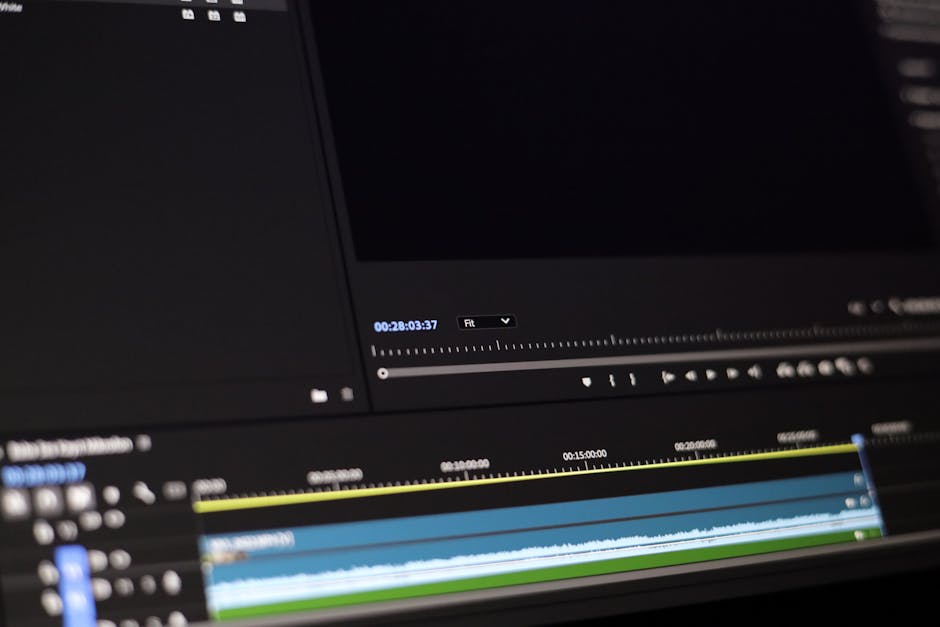
For creators, the key question is simple: which apps do you use daily? If your workflow uses CUDA-based features, NVIDIA is usually faster and smoother. If your workflow is more general or you use software that handles AMD well, AMD can be a very strong value.
I’ve watched friends lose hours of time because they bought the “wrong” GPU for their exact editing tool. One person grabbed an AMD card to save money, then hit missing acceleration features in their chosen effect stack. They ended up spending more to switch later.
Adobe, DaVinci Resolve, Blender, and Premiere-style workflows
Here’s the pattern I see in real systems:
- Adobe-style GPU acceleration: many users get smoother results on NVIDIA due to broader compatibility. But AMD can still do well depending on the exact effect and version.
- DaVinci Resolve: performance depends on your codecs and timeline effects. NVIDIA often has an edge for CUDA-heavy setups, but AMD can be competitive when the software handles it well.
- Blender rendering: performance depends on whether you use CUDA/OptiX or OpenCL with your scene. NVIDIA is usually easiest for many setups, but AMD can shine depending on render settings.
If you want a safer choice, pick based on the most GPU-friendly path in your tool. Don’t guess—check the app’s published GPU support for 2026.
AI upscaling and “assistant” tools
AI helper tools are where GPU brand starts to matter a lot. If your workflow uses popular AI models and tools that assume CUDA, NVIDIA tends to be smoother.
AMD isn’t useless here, but I’ve seen more “it works, but not as fast” situations. For creators who sell time (freelancers and small studios), that difference turns into real money.
Real-world benchmark guide by resolution: what to buy in 2026
Instead of forcing everyone into one chart, use this resolution-based guide. It matches how most gamers and creators actually spend their time: 1080p for speed, 1440p for detail, and 4K when you want the best picture.
1080p gaming (and light editing) recommendations
If you play fast games and edit casually, aim for a card that keeps VRAM comfortable and doesn’t run loud. In 2026, a practical “minimum” for many people is 8GB VRAM, though 6GB can still work if you lower texture settings.
- Pick NVIDIA if you care about smoother upscaling features and you do any CUDA-like AI tasks.
- Pick AMD if you want more value per dollar and you’re not using ray tracing every session.
For buying, also consider your power supply and case airflow. A slightly cheaper GPU that runs hot can ruin your experience during long editor exports.
1440p gaming (the sweet spot) recommendations
1440p is where “VRAM reality” shows up. If you buy too little video memory, you can lose performance in games with high textures, large mods, or ray tracing.
- Go NVIDIA if you want stable upscaling, smoother ray tracing in supported titles, and strong creator compatibility.
- Go AMD if your budget needs more VRAM and your main games respond well to Radeon settings.
In my own checklists for 1440p builds, I treat 12GB VRAM as a comfort line for many “keep it for years” purchases.
4K gaming (and heavy editing) recommendations
At 4K, GPU choice is mostly about two things: raw compute and VRAM. If you’re doing ray tracing and high textures, you want enough memory to avoid stutters.
- NVIDIA often offers a better experience when ray tracing + upscaling matter to you.
- AMD can still deliver strong 4K gameplay, especially if you tune settings and don’t demand the most aggressive ray tracing options.
Creators doing 4K video exports also benefit from cards with strong encoding support and enough VRAM to keep effects smooth.
Comparison table: NVIDIA vs AMD for gamers and creators (what I’d choose and why)
Use this as a decision shortcut, not as a final verdict. Your apps and games decide the rest.
| What you do | NVIDIA strength | AMD strength | My buying advice |
|---|---|---|---|
| Ray tracing gaming | Smoother support + strong upscaling | Good results in select titles | Choose NVIDIA if ray tracing is a priority. |
| High-FPS esports | Great frame rates, stable features | Often strong value | Choose based on price and VRAM, not brand. |
| Video editing (CUDA-friendly tools) | Better software compatibility | Good performance when supported | Pick NVIDIA for CUDA-heavy workflows. |
| Blender / GPU rendering | Easy path for many users | Can be excellent with correct setup | Check render engine settings before buying. |
| AI upscaling & assistants | More “it just works” setups | Works, but can be slower in some tools | NVIDIA is the safer choice if AI is daily. |
| Long-term VRAM comfort | Great options at higher tiers | Often more VRAM per dollar | AMD can be great when VRAM is your priority. |
Buying recommendations (exact scenarios you can copy)
If you don’t want to think too hard, use these scenario-based picks. They’re written for real buying moments: “I have $X,” “I play Y games,” and “I edit with Z app.”
Scenario A: You game at 1080p and want low noise
My recommendation is to buy a mid-range GPU with good cooling and enough VRAM. Both NVIDIA and AMD have solid options here, but NVIDIA’s feature support tends to be more consistent across games that use modern upscaling.
What I’d do in your shoes: target a card that supports the upscaling mode your favorite games use, then prioritize quieter operation. Don’t overpay for ray tracing if you never enable it.
Scenario B: You edit 1080p/1440p and export often
If you export a lot, stability matters as much as raw speed. NVIDIA usually wins for creator tools that rely on CUDA. AMD can still be great, but I’d only choose AMD if your editor app shows clear GPU acceleration support for Radeon in 2026.
A quick sanity check: do a 5-minute test export in your real timeline. If your render takes noticeably longer than expected, don’t “hope” it fixes itself later.
Scenario C: You play at 1440p and stream
Streaming adds extra load (encoding, capture, and sometimes filters). NVIDIA is commonly the smoother choice because many streaming apps and encoder paths are well supported. AMD can work fine, but you’ll spend more time tuning for the best results.
My practical rule: if you stream weekly and don’t want to troubleshoot, pick NVIDIA. If you’re comfortable tweaking settings, AMD can still be a strong value.
Scenario D: You do 4K editing and want fewer bottlenecks
At 4K, you want enough VRAM and strong encode/export support. NVIDIA often offers the safest performance consistency in complex editing projects, especially when AI tools get involved.
If your budget is tight, AMD can still make sense if you prioritize VRAM size and confirm your editor’s GPU acceleration settings. Just don’t buy blindly.
People also ask: NVIDIA vs AMD for gamers and creators
Is NVIDIA better than AMD for gaming right now?
NVIDIA is usually better for ray tracing and modern upscaling consistency in many current games, while AMD can match or beat it in certain titles and often offers better value at specific price points. If you mostly play without ray tracing, AMD can be a great pick.
What matters most is the games you play. If your top 5 games are known to support NVIDIA features well, NVIDIA makes your life easier.
Is AMD good for video editing and content creation?
Yes, AMD can be great for creators, especially when your software and effects use GPU acceleration that works well with Radeon in 2026. The big deciding factor is your editing app’s GPU support and whether it loves AMD or expects CUDA.
I recommend you test with a short export using your real timeline. That beats any “average benchmark” every time.
Which GPU has better value in 2026?
AMD often offers better value per dollar and frequently gives you more VRAM at a lower price. NVIDIA can cost more, but it usually brings stronger feature consistency and creator workflow compatibility.
Value isn’t only price. If you buy the GPU that makes your exports faster or your streaming stable, that can be a better “value” than saving $100 on hardware.
How much VRAM do I need for gaming in 2026?
For most people in 2026, 8GB is the minimum comfort line at 1080p, while 12GB is a safer target for 1440p with high textures. For 4K, aim higher if you use ray tracing or heavy textures.
If you already own a 6GB card, you can still game by lowering settings, but you’ll feel the limits sooner in new releases.
How to choose the right card in 15 minutes (my checklist)
Here’s the exact checklist I use when someone asks me NVIDIA vs AMD advice. If you do these steps, you won’t end up with a “wrong” purchase.
- List your top 10 games and top 3 creator apps. Don’t guess. Write them down.
- Decide your resolution target: 1080p, 1440p, or 4K. Pick the one you care about most.
- Check VRAM needs based on texture settings and your usual mods or effects.
- Verify your software acceleration support for NVIDIA vs AMD (especially for your main editor and any AI tools).
- Plan your power and cooling: match the GPU’s power draw to your PSU and your case airflow.
- Do one short test after installing drivers: run a game benchmark + a quick export.
This is the part people skip. Even a small test can tell you if the card will frustrate you daily.
Driver and stability tips (small things that prevent big headaches)
Drivers can make or break your experience more than people think. In 2026, stability improves across updates, but you still need a clean setup.
- Update to the latest WHQL/production drivers you trust for your workload.
- When switching brands, do a clean driver installation to avoid leftover settings.
- Check your monitor’s refresh rate and set correct scaling so upscaling features look right.
- In creator apps, confirm your GPU is selected in the project settings.
If you’re the type who also cares about system security and account safety, you might like our guide on how to protect your gaming accounts with strong security steps. It’s not GPU-related, but account takeovers are a real thing for streamers and creators.
What I’d recommend right now (clear buying takeaways)
My bottom-line recommendation is simple: choose NVIDIA if you want the smoothest ray tracing/upscaling experience and the most compatible creator workflow, especially if you use CUDA-based tools or AI helpers daily. Choose AMD if you want strong performance for the games you play and better VRAM value for the money.
If you want an easy rule: for gaming-first builds, decide based on ray tracing and upscaling needs. For creator-first builds, decide based on your editor and whether its acceleration path favors NVIDIA in 2026.
Before you hit “buy,” do one quick reality check: confirm VRAM comfort for your resolution and test your real export once. That one step usually saves the most money.
If you’re also building a system for comfort and long sessions, check our guide to PC airflow and fan noise so you don’t turn a great GPU into a loud, hot mess.
Actionable takeaway: Match the GPU to your top apps and your resolution target first. If your work depends on CUDA-heavy tools and AI, pick NVIDIA. If your budget needs more VRAM and your apps play nicely with Radeon, pick AMD—and only after you confirm your export and playback tests.