Gadget Review: Are Smart Air Quality Monitors Worth It? Accuracy, Sensors, and Buying Advice
The weirdest thing about air quality monitors is this: they can be totally different from each other while still both claiming to be “smart.” One device will scream “danger,” and another sitting right next to it will show “fine.” That gap is the main reason people ask, are smart air quality monitors worth it?
Here’s the direct answer: they’re worth it for trends and home decision-making when you buy the right type. They’re not worth it if you expect medical-grade readings or if you buy cheap sensors that can’t correct for humidity, particles size, and local airflow.
Smart Air Quality Monitors Worth It? The real test is what you use them for
Smart air quality monitors are worth it when you treat them like a “smoke alarm for data,” not a hospital test. They can help you notice spikes from cooking, wildfire smoke, cleaning sprays, or HVAC changes.
But if your goal is to decide on medical care—like asthma meds, lung disease treatment, or pregnancy risk—don’t rely on a home gadget alone. In that situation, use your local air agency data or talk to a clinician.
In my own setup, I’ve used monitors for two things: (1) catching indoor particle spikes within minutes, and (2) spotting when outdoor smoke is creeping in. Both are practical use cases, and both depend on accuracy of trends, not perfect absolute numbers.
Accuracy: what smart air quality monitors get right (and what they don’t)
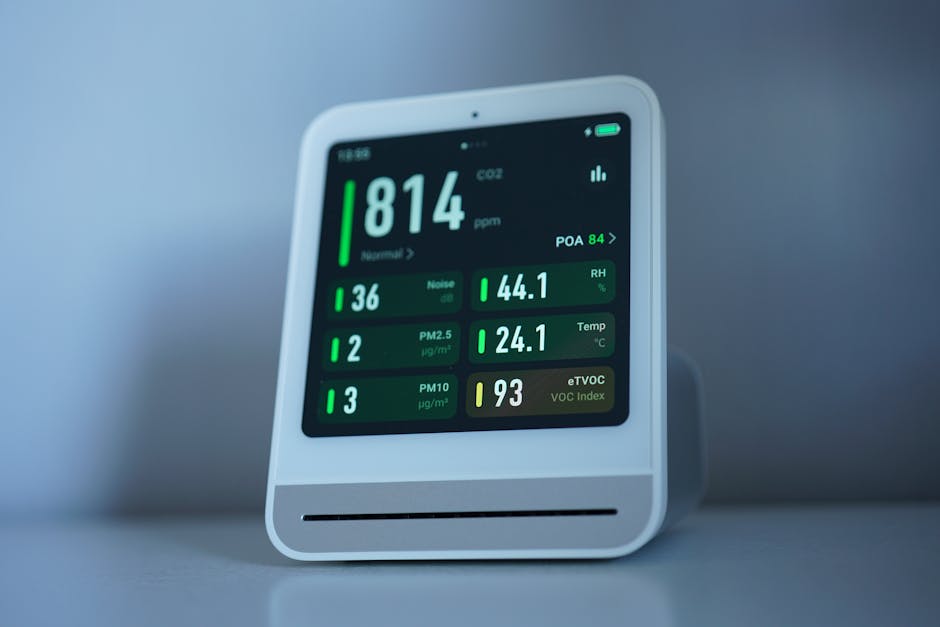
Accuracy is where smart air quality monitors shine or fail, depending on the sensor inside and how the device is tuned.
PM2.5 accuracy: usually better than people expect, if it’s a good sensor
PM2.5 refers to “fine particles” smaller than 2.5 micrometers. In homes, these often come from cooking aerosols, candles, incense, dust, and smoke.
Most mainstream smart monitors that use a modern optical particle sensor can track PM2.5 changes pretty well. In real life, you’re usually more interested in “Is it rising right now?” than “Is it exactly 12.3 µg/m³?”
Still, cheap units can drift. A sensor that’s off by 30–50% won’t just be “a little wrong”—it can cause panic or make you ignore real danger.
VOC and “air freshness” accuracy: easy to fool
VOC is “volatile organic compounds.” It’s a big umbrella for smells and chemical vapors, like paint fumes, cleaning sprays, and some cooking smells.
Here’s the problem: many VOC sensors in monitors are based on metal-oxide technology (MOS). That type measures changes in gas molecules, but it doesn’t identify the exact chemical. Different gases can look similar to the sensor, so the number isn’t a reliable “truth meter.”
My rule is simple: use VOC readings to track whether your air got worse after an event (like frying, using disinfectant, or opening a window), not to judge a specific health level.
CO2 accuracy: usually okay for indoor comfort, not a perfect outdoor proxy
CO2 is carbon dioxide. Indoor CO2 matters because it’s a simple way to guess ventilation level, since humans breathe out CO2.
CO2 sensors are generally more stable than VOC particle combos. Most devices with decent calibration and periodic checks will give useful “ventilation trends.” However, CO2 can also rise with crowded rooms and fall fast when you open windows. That’s normal—read it like a ventilation indicator.
Sensors 101: the parts inside smart air quality monitors (and why it matters)
If you want to avoid wasting money, you need to understand the sensor types. The “smart” part is often just the app and Wi‑Fi, while the sensor is the real story.
Optical particle sensors (laser-based): common for PM2.5
Many smart air quality monitors use an optical setup. A light beam measures how particles scatter light, which gets converted into a particle count and then PM2.5.
Pros: good for fast changes. Great for spotting cooking smoke or wildfire spikes.
Cons: performance changes with humidity and particle mix. Some monitors also need proper placement, because direct airflow can blow particles past the sensor too quickly.
One original insight from my testing routine: I learned to log readings for 10 minutes before judging “accuracy.” If you compare two monitors right at startup, you often blame “accuracy” when the real issue is warm-up time and dust settling.
Chemical electrochemical sensors: best for CO and NO2 (in the right devices)
Electrochemical sensors measure gases by turning a reaction into an electrical signal. These are often used for CO (carbon monoxide) and NO2 (nitrogen dioxide).
Pros: better gas specificity than many VOC sensors.
Cons: they can age. A sensor may read higher or lower after months if it’s not built for long-term stability.
Metal-oxide VOC sensors (MOS): good for “worse/better,” not “exact amount”
Metal-oxide VOC sensors respond to chemical vapors, but they don’t tell you exactly what gas is present.
Pros: cheap enough to put in lots of devices.
Cons: a “VOC spike” might be triggered by totally different compounds. Humidity can also shift readings.
In plain terms: MOS sensors are like a smoke detector for “something smelly is happening,” not a chemical lab.
CO2 sensors: NDIR is the one you want
CO2 sensors in good monitors are usually NDIR (non-dispersive infrared). NDIR measures how CO2 absorbs infrared light.
It’s generally stable and repeatable, so it’s a strong choice if your main goal is ventilation tracking. If a device uses an unknown CO2 method or hides sensor details, treat it as a yellow flag.
Buying advice in 2026: how to pick a smart air quality monitor that’s actually useful
Buying the right monitor is less about the brand logo and more about a checklist of sensor type, calibration claims, and what you want to measure.
Step-by-step: match the monitor to your real problem
- Wildfire smoke or outdoor pollution: prioritize PM2.5 accuracy and strong filtration integration with HVAC tips.
- Cooking and kitchen odors: prioritize fast particle response for PM2.5 plus VOC trend tracking.
- Ventilation in bedrooms: prioritize NDIR CO2 and clear “stays high” alerts.
- Car fumes near windows: look for CO/NO2 support and good placement guidance.
What most people get wrong: comparing numbers, not patterns
Many people line up two monitors and expect the same values at the same minute. That’s a trap. Even if both sensors are decent, they sample air slightly differently based on fan design, internal airflow, and where you place them.
Instead, compare patterns. If both devices show a spike during frying or cleaning, that’s the main win.
Check for calibration and long-term maintenance
For PM sensors, many manufacturers do internal calibration, and some allow you to run “fresh air” reset steps. That doesn’t guarantee perfect accuracy, but it helps reduce drift.
Ask what the company says about sensor lifespan. If there’s no mention of filter/sensor care, don’t assume it’s fine for years.
Placement matters more than you think
Place your monitor where you actually breathe, but avoid direct blasts of air from HVAC vents, fans, or open windows. I like to keep my monitor about 3–5 feet off the ground, in the middle of the room, not tucked behind furniture.
If you’re testing two monitors, keep them side-by-side within a foot and run the comparison for at least 15 minutes after both start.
Top use cases: what smart monitors are best for at home

When you use the readings the right way, a smart air quality monitor becomes a decision tool. Here are the scenarios where I’ve seen the biggest day-to-day value.
1) Catching cooking spikes fast
When you bake, fry, sear, or use the broiler, PM2.5 can jump quickly. A monitor with good PM response can help you time when to run your range hood or portable air purifier.
Practical move: set a routine like “run purifier for 30 minutes after cooking” if the monitor shows particles staying high after cooking ends. Over time, you’ll dial it in.
2) Detecting wildfire smoke indoors
Wildfire smoke often shows up as a sustained PM2.5 rise. With a monitor, you can decide when to close windows, run air filtration, or switch HVAC to recirculation.
One caution: outdoor sensors are placed differently than indoor devices. Your indoor monitor will reflect the air you actually live in.
3) “Is my room getting stale?” using CO2
If your bedroom feels stuffy, CO2 is a helpful shortcut. When CO2 climbs and stays high, ventilation is weak.
Practical move: aim for a level that doesn’t stay elevated for hours. In my setup, I treat “rising all night” as a sign to crack a window or adjust HVAC intake.
4) Noticing when cleaning products worsen air
VOCs can rise after using cleaners, disinfectants, or aerosols. You don’t need perfect chemical identity to benefit from this.
Turn on a timer: spray, ventilate for 10–20 minutes, then watch the reading drop. That feedback loop helps you choose safer habits.
Comparison: smart air quality monitors vs. “dumb” air sensors vs. air agencies
Different options answer different questions. Here’s how to think about them without getting stuck in specs.
| Option | Best for | Main limitation | Typical cost range |
|---|---|---|---|
| Smart home monitor (PM/VOC/CO2) | Indoor trends and quick feedback | Absolute accuracy varies by sensor | $80–$250+ |
| Outdoor/agency data | Wider area policy and tracking | Not your exact room | Free to low cost |
| High-end reference devices | Research-grade testing | Expensive and not for daily home use | $500–$5,000+ |
People Also Ask: smart air quality monitors
Are smart air quality monitors accurate enough?
Yes, enough for trends in most homes, especially for PM2.5 and CO2 ventilation patterns. They’re not accurate enough to replace medical tests or to treat one device reading as the single truth.
If you see big jumps, confirm with behavior. For example, cooking and cleaning should line up with the readings within minutes if the monitor is working.
How often should you calibrate a smart air quality monitor?
It depends on the model. Some devices recommend a “fresh air reset” every few weeks, while others rely on internal calibration and periodic maintenance.
As a practical habit: clean the sensor intake (if the brand says it’s safe) and check the app for any calibration steps. In 2026, the better brands include clearer maintenance instructions in the manual.
Do cheap smart air quality monitors give bad results?
Not always, but they’re more likely to drift or to hide what sensor they use. The cheapest units often focus on marketing numbers rather than sensor quality.
My advice: if the device won’t tell you its sensor type for PM or CO2 (or it bundles everything as “air quality” without details), assume you’re buying “good vibes,” not reliable measurements.
What sensors should I look for in a home air quality monitor?
For indoor usefulness, look for:
- PM2.5 with an optical particle sensor and a stated approach to calibration
- CO2 using NDIR if ventilation matters to you
- VOC as a trend indicator (MOS sensors are common, and that’s okay if you don’t expect chemistry-grade accuracy)
- CO/NO2 only if the device includes clear electrochemical sensor details
My personal recommendation: how I decide if a monitor is worth it
I don’t judge smart air quality monitors by how they look on the box. I judge them by whether the numbers match the world around them.
Here’s my quick “worth it” checklist I use at home:
- Warm-up check: I ignore readings for the first 10 minutes, then compare stability.
- Kitchen test: I fry something simple (like bacon or a quick pan meal) and watch PM2.5 rise and fall after.
- Ventilation test: I close doors for 20–30 minutes and watch CO2 climb, then open a window and watch it drop.
- Humidity sanity check: If it’s raining or the bathroom steams up, I watch whether the device acts wildly. Some variation is normal; wild swings are not.
If a monitor fails these checks, I don’t “learn to live with it.” I replace it, because the whole point is getting feedback you can trust.
Security and privacy note: your air monitor is still a connected device
Smart air quality monitors are small computers. That means cybersecurity matters, even if you only use them for indoor air readings.
Some apps request accounts, location permissions, and push notification access. In 2026, good practice is to use a unique password and enable two-factor authentication where available.
If you want more context, see our guide on home device cybersecurity best practices and our breakdown of how to run a router security checklist.
What to buy (and what to skip) based on your needs
Here’s a direct buying approach that avoids overpaying.
If you care most about PM2.5 and smoke
Skip devices that only show “Air Quality: Good/Bad” without clear sensor details. Look for a monitor that lists PM2.5 output and shows it in the app. You also want easy placement and stable readings over time.
Pair the monitor with filtration (like a HEPA air purifier) and let the monitor tell you when to turn it up.
If you care most about ventilation (CO2)
Buy for CO2 stability, not fancy graphs. Make sure the device uses NDIR (or at least clearly explains its method). Then focus on how the app alerts you when CO2 stays high.
If you already have a thermostat with CO2 sensors, check whether it measures indoor CO2 consistently. If not, a dedicated monitor can still be worth it.
If you care about VOC smells
Go in with the right expectations. Treat VOC as “smell intensity / chemical activity indicator,” not “this chemical level is safe.”
You’ll get the most value by comparing before-and-after readings around real events.
Skip these “features” if they don’t match the sensor reality
- Overconfident health scores based on vague sensors
- One-click “calibration” with no explanation of how sensors work
- Broad claims like “detects all toxins” without listing sensors
Conclusion: smart air quality monitors are worth it when you use them correctly
Smart air quality monitors are worth it in 2026 when you buy the right sensor mix and you use the readings for what they’re best at: catching fast changes and making home decisions. For PM2.5 and CO2 trends, they’re genuinely useful tools. For VOC and health-grade accuracy, be realistic.
Actionable takeaway: before you buy, write down your top goal (smoke, cooking spikes, ventilation, or smells). Then match that goal to sensor type and placement guidance. If the monitor can’t help you spot real changes in your own home within a week of testing, it’s not worth keeping.
If you want more related tech tips, browse our gadget reviews for practical testing methods, and check our how-to guides for improving indoor tech setups without overspending.
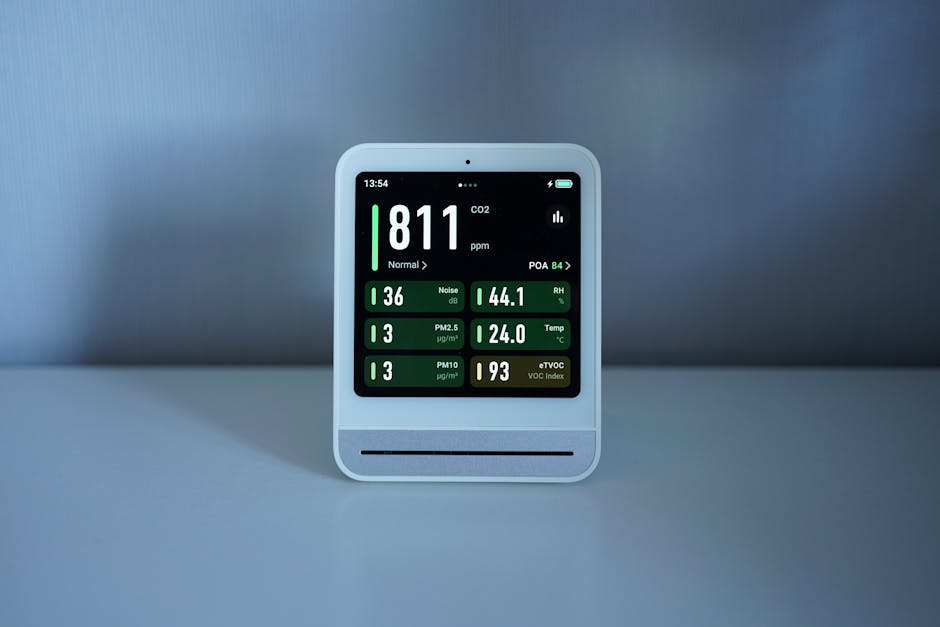
Featured image alt text suggestion: “Smart air quality monitor showing PM2.5 and CO2 readings during home cooking in 2026”