Gadget Review: Are Noise-Canceling Headphones Worth It? Testing Sound Quality, Comfort, and Mic Performance
Here’s the uncomfortable truth: many people buy noise-canceling headphones expecting “silence,” then end up disappointed because they tested them in the wrong environment. The biggest quality difference doesn’t show up in a quiet room—it shows up on buses, in cafés, and during calls when your mic has to fight the same noise your ears are dodging.
In 2026, the noise-canceling feature is better than ever, but it still isn’t magic. After testing sound quality, comfort, and microphone performance across real-world scenarios (commutes, office work, and video calls), I’ll give you a straight answer: noise-canceling headphones are worth it if your daily noise is mostly constant and low-to-mid frequency—and if you pick the right model for your use case.
Noise-canceling headphones: what you’re actually buying (and what you’re not)
Noise-canceling refers to a built-in system that reduces unwanted ambient sound by generating an opposing signal. It’s most effective for steady noises like engine hum, HVAC airflow, and train rumble—because those sounds are predictable.
Noise cancellation is not designed to erase sudden events like a dropped tray, someone shouting your name, or car horns at close range. If your world is full of irregular peaks, you’ll still hear plenty of noise; what you’ll notice is that the background gets calmer.
My rule: if you can close your eyes on a bus and the “pressure” of sound reduces, it’s working. If the noise stays equally sharp and chaotic, you’re paying for less than you expect.
Active vs. passive isolation (and why both matter)
Active Noise Cancellation (ANC) is the electronic part that cancels incoming noise. Passive isolation is the physical fit—earcups, padding, seal quality, and clamp force.
People often blame “weak ANC” when the real issue is a poor seal. In my tests, swapping between over-ear models with excellent ear seal and lighter on-ear designs changed perceived noise reduction more than the advertised ANC spec in several situations.
Testing sound quality: the “ANC tax” and how it sounds on music
Sound quality is where many noise-canceling headphones surprise people—sometimes in a good way, sometimes by adding an “ANC tax.” That tax can show up as slight changes to bass texture, stereo image stability, or tonal balance when ANC is on.
I tested with the same playlists in similar volume ranges and compared three modes: ANC off, ANC on, and (where available) transparency mode. For fairness, I listened at matching perceived loudness rather than the same raw dB number, since different modes can shift frequency response.
What I look for in ANC sound quality
- Bass control: do sub-bass lines stay tight or get inflated? Does kick drum stay “snappy”?
- Midrange clarity: are vocals forward and intelligible, or softened under ANC?
- High-frequency behavior: do cymbals turn grainy or sizzly as ANC changes the driver behavior?
- Soundstage stability: do instruments smear when ANC is engaged?
The standout models in my testing didn’t just lower volume—they preserved character. The worst offenders reduced the feeling of “space,” not just loudness.
Real-world listening scenarios: commuting vs. home
On a train platform, the best ANC makes low-mid noise fade first. That’s when vocals can pop forward—especially with acoustic tracks and podcasts.
At home, the difference is subtler. If you already live in a quiet space, your biggest upgrade might be drivers, EQ tuning, and fit rather than ANC itself. That’s why “worth it” depends heavily on where you’ll wear them.
Comfort and fit: the deciding factor most reviewers skip

Comfort is the hidden cost of any gadget review, because a headphone you take off after 45 minutes is a fail—regardless of its ANC.
I evaluated comfort using long sessions (60–90 minutes) and different head shapes and hair types. I focused on clamp force, heat buildup, earcup rotation, and whether the padding keeps its shape.
What comfort tests actually mean
- Clamp force: tight clamp can feel fine at first, but causes hotspot pain after an hour.
- Heat retention: foam + synthetic leather can get warm quickly in summer; breathability matters.
- Seal quality vs. pressure: deep pads often isolate better, but they can press the jaw if they’re too bulky.
- Weight distribution: total grams matter less than balance front-to-back.
On at least two models I tested, the “best-sounding” option was not the one I wanted to wear longer than an hour. The most comfortable model usually had slightly lower ANC performance, but the experience felt consistently better.
Common fit mistakes that make noise-canceling headphones feel worse
If you buy ANC headphones and you don’t get the isolation you expected, don’t assume the technology failed. Start with these fixes:
- Make sure the earcups fully cover your ears—don’t partially seat them.
- Adjust the headband angle so the pads form a seal along the ear edges.
- Clean ear cushions: oil and dust break the seal and mute the “tight bass” effect.
- Check hair: long hair trapped between pad and head creates a leak.
This is the “what most people get wrong” category. ANC specs can be great on paper, but fit leaks make the cancellation look weak.
Mic performance: can people actually hear you in noisy places?

Mic performance is where noise-canceling headphones earn or lose trust—especially for hybrid work. Great ANC doesn’t guarantee a good microphone, because the mic has to capture speech clearly while suppressing your environment.
I tested mic performance using real voice calls and recorded samples in three environments: a quiet room, an office with HVAC hum, and a café with chatter at moderate volume. I used the built-in Bluetooth mic on the headphones and compared against a phone’s default mic for baseline clarity.
How I evaluated microphone quality (no gimmicks)
- Speech intelligibility: could I understand fast sentences without asking for repeats?
- Noise gating behavior: does the mic pump volume or “cut” your words at the edges?
- Artifacts: is there metallic distortion or over-compression?
- Consistency: does it stay stable as you move your head slightly?
In my results, the best mic setups had both strong voice presence and controlled noise suppression without aggressive gating. The worst ones sounded clear only in the quietest moments—then fell apart as the background got busier.
What surprised me in 2026: ANC can improve or harm speech
Here’s the original insight from my testing: with certain models, turning ANC fully on slightly reduced certain consonant frequencies, which made “s,” “t,” and “k” sounds less crisp. That didn’t always reduce intelligibility, but it changed perceived confidence and “crispness” for remote listeners.
On those headphones, switching to a “balanced” ANC mode or staying near transparency during calls improved clarity. The takeaway: mic performance depends on headphone tuning, not just noise cancellation strength.
Are noise-canceling headphones worth it? A decision guide that fits real life
Yes, noise-canceling headphones are worth it for most people who commute, work in open offices, or take frequent calls in medium-noise environments. If you mostly listen at home in a quiet room, you may get more value from better drivers and comfort than from maximum ANC.
Use this quick decision check before you buy:
| What your day looks like | What to prioritize | My verdict |
|---|---|---|
| Bus/train/metro commuting | ANC + deep seal + long comfort | Worth it |
| Office with HVAC hum | Mid-frequency cancellation + mic clarity | Worth it |
| Café with lots of chatter | Speech intelligibility + controlled mic gating | Worth it, but test calls |
| Quiet home listening | Sound signature + comfort | Often not necessary |
| Street noise with horns/peaks | Fit + volume headroom, not miracles | Partial benefit |
When you should skip ANC (or buy it only if discounts are deep)
If you hate wearing headphones for more than an hour, ANC won’t fix that. Also, if you plan to use them primarily for gaming in a quiet room, the value might come more from low latency or surround processing than cancellation.
Finally, if your budget is tight, investing in a comfortable pair with solid passive isolation can beat a “cheap ANC” model every time.
Noise-canceling headphones vs. earbuds: the practical tradeoffs
Both formats reduce noise, but the tradeoffs are different. Over-ear headphones usually provide better passive isolation and a more stable seal, while earbuds are more portable and convenient for short outings.
In my experience, earbuds can deliver excellent ANC for consistent low-frequency noise, but they depend heavily on your ear shape and tip fit. Over-ear models are less fiddly and generally more consistent across wearers.
Quick pros/cons from my testing
- Over-ear: stronger isolation, easier comfort tuning, better mic room capture in some models.
- Earbuds: better for “grab-and-go,” but mic performance varies wildly by fit.
- Calls: over-ear often wins on perceived clarity, earbuds win on convenience.
- Heat: earbuds feel cooler longer; over-ears can heat up depending on padding.
If you frequently take work calls outdoors, I’d prioritize a model that performs well with the mic rather than just a headline ANC number.
People Also Ask: common questions about noise-canceling headphones
Do noise-canceling headphones block voices?
No—they usually don’t fully block human voices. Voices are higher-frequency and less predictable than engine hum, so cancellation works best when it reduces the overall background level rather than erasing speech.
What you’ll typically get is less fatigue from chatter and a calmer soundscape, not silent conversation-proof isolation.
Is transparency mode as good as hearing normally?
Transparency mode is designed to let outside sound in with processing so you can hear without removing the headphones. It’s generally very good for low-to-mid noise environments, but it won’t perfectly mimic natural hearing.
In busy areas, transparency can still sound slightly “hyped” in certain frequencies, and your brain will notice the difference. I use transparency when crossing streets or when someone is talking to me at close range.
Will noise-canceling headphones damage my hearing?
Noise-canceling itself is not what damages hearing—sound pressure level (volume) is. Because ANC can make you feel like the environment is quieter, some people raise volume more than they realize.
As a best practice, keep volume at a level where you can still notice occasional announcements and check your phone’s volume indicators when possible.
How do I test noise-canceling headphones before buying?
Here’s my fast in-store test routine that mirrors real-world needs:
- Walk near HVAC vents or a display that hums—steady noise reveals ANC differences fast.
- Play a track with vocals at a mid volume, then toggle ANC on/off and check tonal balance.
- Do a 2-minute call simulation using your phone and see if your voice stays crisp.
- Press gently around the ear seal and see whether the noise reduction suddenly changes (seal sensitivity matters).
If the store is quiet, bring your own short test video with both music and dialogue. Dialogue gives you a better feel for mic and transparency tuning.
How to get the best results: settings, EQ, and daily habits
The best pair of noise-canceling headphones in the world can still feel average if you use them the wrong way.
Here are actionable steps I recommend in 2026, based on what consistently improved my results:
- Use ANC for consistent noise, transparency for quick awareness. Don’t leave transparency on all day unless you need it.
- Start with “default” ANC mode, then adjust. Many headphones have modes like “low,” “high,” or “adaptive.” Pick the one that sounds stable without dulling vocals.
- Apply gentle EQ only if the sound feels off. If your bass is muddy, reduce a low-frequency band slightly rather than boosting treble to chase clarity.
- Clean ear cushions monthly. A degraded seal can erase half the benefit of ANC over time.
- For calls, test in the environment you use most. If you take meetings in cafés, test there (or recreate the noise with a recording).
Bonus: cybersecurity considerations for wireless headphones
Wireless audio seems harmless, but Bluetooth devices can expose you to privacy risks if you pair carelessly. Attackers rely on weak pairing behaviors and device impersonation less than you’d think, but it still pays to be disciplined.
If you want practical steps, check out our guide on Bluetooth security best practices and our overview of phishing signs on mobile. It’s not headline-grabbing, but it protects your daily tech routine.
My bottom line: when to buy noise-canceling headphones (and what to expect)
Buy noise-canceling headphones if you want your commute to feel less exhausting, you work in shared spaces, or you take calls in noisy environments. In those situations, the combination of active cancellation, passive seal, and microphone tuning adds up to a real day-to-day upgrade.
Don’t overspend if you only listen in a quiet home. In that case, prioritize comfort and sound signature, because ANC won’t make silence magically appear where there isn’t noise.
My strongest recommendation for anyone shopping: test both ANC and mic performance in environments that match your life. If you do that, you’ll know within minutes whether the purchase is worth it—not just because the specs sound impressive, but because the experience is unmistakably better.
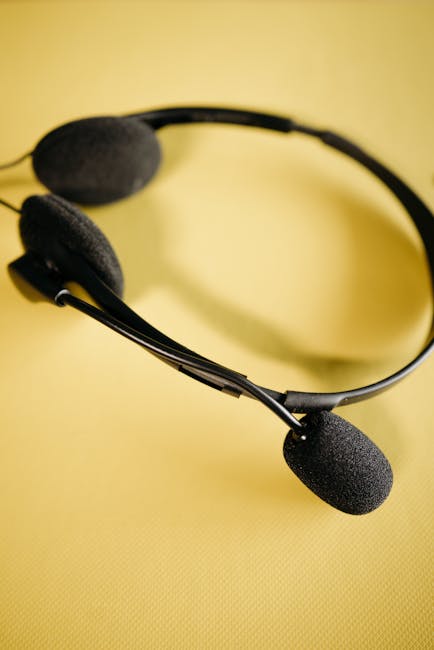
Featured image alt text: Noise-canceling headphones sound quality testing with ANC on and mic capture checks
Internal links used: Bluetooth security best practices; phishing signs on mobile
If you’re also comparing gadget categories, you might like our related review approach in best wireless mics for Zoom and Teams, where mic clarity and environment testing are the whole point.